The vehicle technician shortage remains one of the automotive industry’s biggest challenges. But has the conversation become too focused on finding more technicians and not focused enough on making better use of the skilled people we already have?

That was one of the central questions our CEO, Simon King, discussed with Curtis and Philip during a recent Motor Trade Radio Supplier Special.
The shortage hasn’t disappeared. It has evolved. Businesses are dealing with a more complex challenge than simply a lack of people, with changing skills requirements, an increasingly diverse vehicle parc and continued pressure on workshop capacity.
For Simon, that means recruitment remains vital, but it cannot be the only answer: “We can’t just recruit our way out of this. Productivity needs to become a bigger part of the conversation.”
The vehicle technician shortage has evolved
Vehicle technology is changing rapidly, increasing demand for a broader mix of mechanical, electrical, diagnostic and digital capabilities.
For dealerships and workshops, the challenge isn’t simply finding more automotive technicians. It’s having access to the right skills at the right time, while also making better use of the technicians already working within the industry.
That requires us to broaden the conversation beyond vacancy numbers and vehicle technician jobs and look more closely at the capacity that already exists within workshops – and where valuable technician time is being lost.
Workshop productivity deserves more attention
Skilled technicians can spend an estimated 10–20% of their working day on administration, documentation and warranty reporting. Add inefficient processes and time spent searching for technical information or waiting for specialist support, and a significant amount of valuable technical resource can be diverted away from fixing vehicles.
Giving one technician back just 30 minutes of productive time each day can create more than 10 additional productive hours every month – effectively another working day. Across a workshop, dealer group or national network, those gains can translate into significant additional workshop capacity.
It’s an area we have been exploring through Autotech Connect, looking at how AI, connected technology and remote technical support can remove some of that friction. Early trials have reduced some warranty write-ups from more than 30 minutes to around five minutes. Technology can also help technicians access specialist knowledge remotely, enabling expertise at master technician level to be shared more effectively across teams and locations.
The opportunity isn’t to replace technical expertise with technology. It’s to use technology to make that expertise more accessible and productive.
The motor technician role is becoming more complex
Making better use of the workforce we already have is only one part of the challenge. The skills those technicians need are changing too.
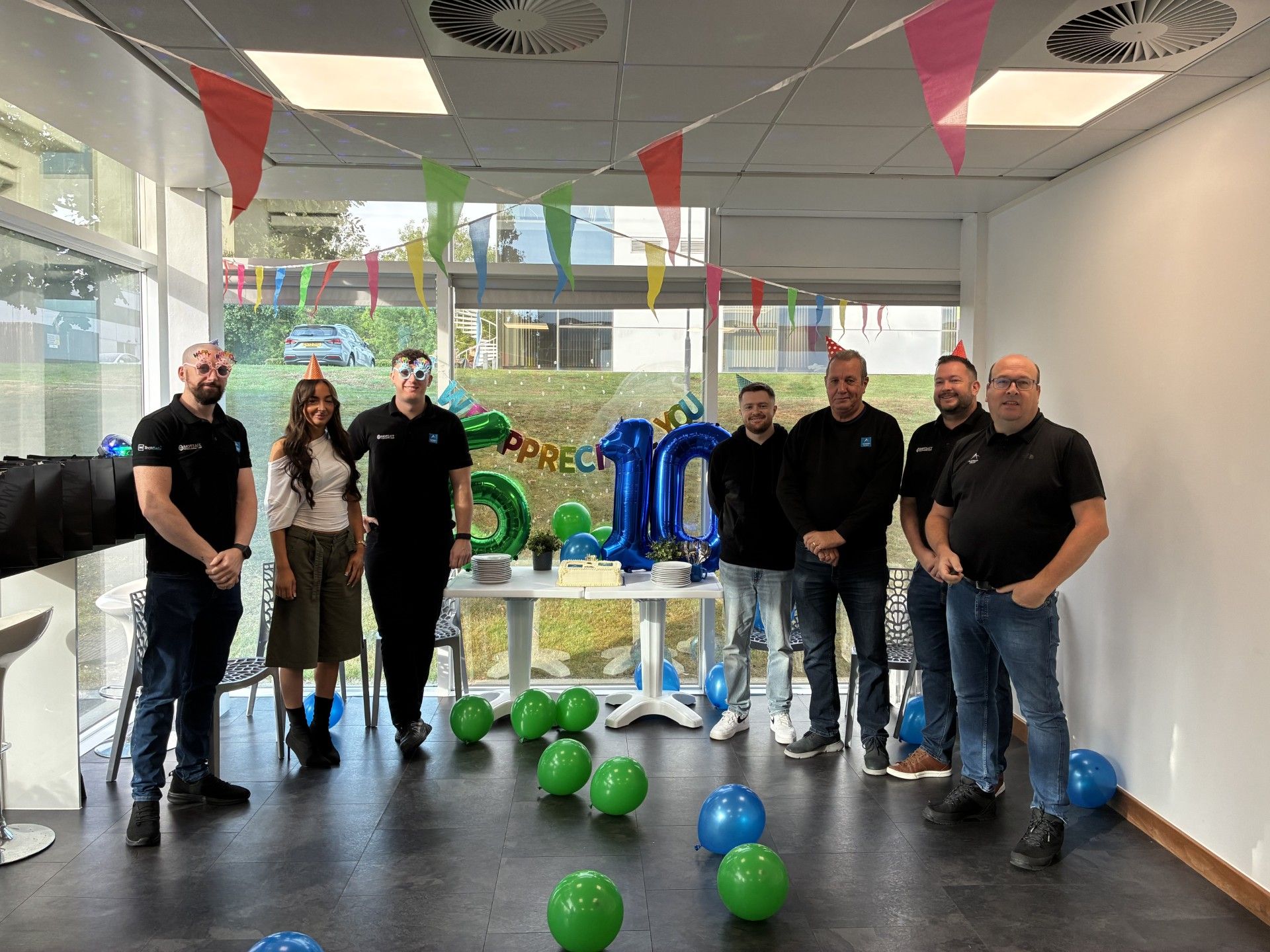
As Autotech Training celebrates its tenth anniversary, we’ve been able to see first-hand just how dramatically workshop skills requirements have evolved. The fundamental mechanical skills haven’t disappeared. Instead, technicians have had to add layer upon layer of new capability.
EV and high-voltage competence have understandably dominated the skills conversation in recent years, alongside growing demand for ADAS and advanced diagnostics. But the rapid arrival of new vehicle manufacturers – including the increasing presence of Chinese brands in the UK – is adding another dimension.
Different vehicle architectures, software systems and diagnostic processes are entering workshops while the existing ICE, hybrid and electric vehicle parc remains on the road.
The technician of the future will therefore need to be increasingly adaptable and multi-skilled. Training can’t be something completed at the beginning of a career; continuous skills development will become increasingly important as the vehicle parc continues to diversify.
Creating a stronger route into the industry
Greater productivity doesn’t remove the need to bring new people into automotive. We also need a stronger pipeline of technicians coming through.
Yet there is a fundamental challenge for newly qualified technicians: employers understandably want experience, but technicians need that first opportunity to gain it.
It’s a gap we’ve been working to bridge through Autotech Academy. More than 500 interns have now been placed into the automotive industry, with 90% of those successfully completing their internship transitioning into full-time employment.
Those figures demonstrate that the talent is there. The challenge is creating effective routes from education into employment and giving newly qualified technicians the opportunity to prove what they can do.
Recruitment is only part of retention
Bringing people into the industry is only worthwhile if we can retain and get the best from them.
Our Autotech Recruit What Technicians Want report found that 70% of technicians surveyed were considering leaving their current employment, while 79% rated working hours as very important – ahead of salary.
The findings also showed that priorities change throughout a career. Younger technicians place particularly high value on progression and skills development, while pay, stability and flexibility become increasingly important at different stages.
Our subsequent research into neurodiversity across the automotive workforce adds another dimension. More than a third of respondents identified as neurodivergent, yet nearly 60% felt their strengths weren’t recognised at work.
If we’re serious about tackling the technician shortage, we need to spend as much time understanding how to develop, motivate and retain the people already in automotive as we do attracting the next generation.
As Simon put it during the podcast: “We spend a lot of time asking how we attract the next technician, but perhaps not enough asking why the technician we’ve already got might leave.”
There isn’t one solution to the challenges facing the automotive workforce.
We need to create opportunities for new people to enter the industry, understand what existing technicians need to stay and develop, ensure skills keep pace with a rapidly changing vehicle parc, and look critically at where skilled time is being lost within workshops.
Crucially, these issues can’t be addressed in isolation.
Recruitment without continued skills development won’t build long-term capability. Training without retention risks losing that investment. And technology will only deliver meaningful productivity gains if the people using it have the skills and confidence to embrace it.
For us, the answer increasingly comes back to three things: people, skills and technology.
And as Simon concluded during the discussion: “The businesses that will be strongest in five years won’t necessarily be those with the most technicians. They’ll be the ones making the best use of the people and skills they have.”
Listen to Simon King’s Motor Trade Radio Supplier Special to hear the full discussion on the evolving technician shortage, workshop productivity, skills, AI and the future automotive workforce.
Share This Article:
Related Posts




Autotech Group
We are innovators, disruptors, collaborators - 100% focused on driving engagement and delivering change in the automotive aftermarket, to make businesses more efficient, productive and profitable.
Links

